Since Ms. Wood, Ms. Edwards, Kennedy and I slept in Boston we met the group at Logan Airport. There was a long line waiting at the hotel to get to the airport. It looks like everyone plans to go away on vacation somewhere. The group from Dirigo actually arrived before us and were waiting in line to check their luggage.
Ms. Beane assigned each student to an adult to act as buddies. Mackin was Ms. Edwards buddy. We had to wait in line for a long period of time due to the fact that there was a problem with the computers. The group also had a lot of luggage to check in. Ms. Beane arranged it so that each individual on the trip could check two bags. One bag had all of our personal items and the other bag held the items that were being donated.
We flew from Boston to Miami. I think that everyone slept on the way down. In Miami we had just enough time to use the rest rooms and grab a bit to eat. This was because of the walk across the terminal. We even got to ride a train in the airport. It is a good thing our layover was about an hour.
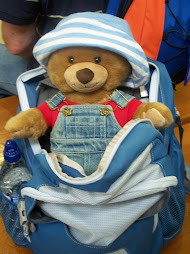
Our second flight was from Miami to Santiago, Dominican Republic. The flight lasted about two hours and Ms. Edwards decided to read on the flight as well as listen to music. She also had to fill out her customs form. I didn't get a form to fill out. I guess they don't have forms for animals.
The airport we arrived in was Cibao International Airport in Santiago de los Caballeros. This airport was the third international airport created in the country. The airport has only been in existence since 2002. The airport was beautiful on the inside. The first thing that we had to do was go through customs. Ms. Beane had to purchase visas for all of us and we had to wait in line to receive the cards and then stand in another line and give the card and our passports to someone else. They asked questions about our purpose for being in the country and where we planned to visit. After going through customs we each picked up a chart to put our luggage on. I have never seen Ms. Edwards have SO much luggage. We were supposed to then have our luggage searched one more time before leaving the airport. They waived us through instead and we were able to finally go outside and enjoy the fresh Dominican HOT air.


Waiting for us outside was Luis and a group of his students. They brought two buses for the luggage and us. Each student also brought a Dominican flag for us. It was great being greeted by the students and Luis. We should be greeted like that on all our trips.

We were able to cram everyone into one bus. Our luggage was put into the other bus and any remaining luggage went in Luis's car our the bus with us. The bus was a crowded with people and luggage. It is a good think that we are all such a close group. Kennedy and I were able to ride up front with the bus driver and Mr. Swan. The buses do not have seat belts.


Our first stop in the Dominican Republic was a store where Luis purchased everyone a beverage of their choice. Ms. Edwards got an amazing lemonade. A lot of the other adults purchased soda that had REAL sugar in it. They said it reminded them of Coke from the 80s. I think there will be a lot of soda drinking going on this week. The store was set up a lot different from our quick shops. Everything was behind a counter and you had to ask the clerk for the items that you wanted. They also had warm food sitting in heaters like you would see in the school kitchen. The food looked really good and definitely Dominican.


The ride to our hotel lasted 20 minutes. It was our first experience in the city and we were able to experience a lot in that 20 minutes. It appears that they don't follow the same rules of the road that we have. The biggest vehicle seems to always have the right of way. It is amazing what you can fit on a moped. That seemed to be a favorite mode of transportation down there. We saw multiple people (little kids included) riding together. We also saw someone carrying a picture as well as a someone traveling with a fridge. We also saw an individual driving around with goat in their car.
We saw a variety of structures along the way. We saw small stores, people selling fruit and vegetables on the streets, a variety of mopeds, trucks with people crammed into them, hotels that could be rented by the hour, political signs for the upcoming election and much more.

We arrived at our hotel and checked into our rooms. Ms. Wood, Kennedy, Ms. Edwards and I shared a room. Ms. Beane said that we had to stay in the hotel and couldn't explore the surrounding area. We had a few hours to rest from our trip, take showers, prepare for dinner and pack our bags for either the beach or to keep at Luis's house. We had limited space in the bus for luggage so we were asked to bring the bare minimum.


For dinner we board our bus again and went to an area near Luis's house. The group was given the option of a restaurant that focused on hamburgers, sushi, or Italian food. Ms. Wood, Ms. Edwards, Kennedy and I went for hamburgers. A group of students, parents, teachers, and Luis joined us. Luis showed us two beautiful stones that are found in the Dominican Republic. The first is Larmar and the second is Amber.
Larmar is a rare blue stone. It is usually white, light-blue, green-blue or deep blue. The rock is composed of acid silicate hydrate of calcium and sodium (pectolite). It was named by a Peace Corp volunteer and Miguel Mendez. It was named after Miguel's daughter Larissa and the word for sea (mar). People tend to purchase this stone in the form of jewelry. (wikipedia)
Amber is a fossilized tree resin. It can be different colors but is usually associated as yellow-orange-brown. It is usually purchased as jewelry or decoration.
Dinner was a blast. Luis told us stories about the Dominican Republic and gave everyone a pin to wear that had the Dominican Republic and the flag. Everyone ordered huge hamburgers and fries.


After dinner we walked back to Luis's house where we were able to make phone calls home through the computer. On the walk to his house we came across an amazing monument/memorial to Dominican Freedom. It was written completely in Spanish so neither Ms. Edwards or I could read the information.


We returned to the hotel and relaxed for a while. There were several channels that could be watched. Unfortunately they were all in Spanish. We were able to find CNN in English. We watched CNN for a little while, wrote in our journals, and went to sleep.


 The last picture is of the t-shirt that we will all be wearing while we are at the one room school house. Well everyone except Kennedy and myself. That's ok though. Ms. Wood's mother is bringing us back a pair of Mickey Mouse ears from Disneyland in California. She is there at a conference.